PET/CT detects head/neck cancer recurrences earlier
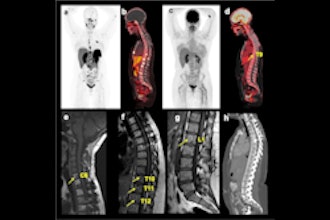
January 28, 2012 -- Routine use of follow-up PET/CT scans can detect local cancer recurrences before they become clinically apparent, and may improve outcomes of subsequent salvage therapy, according to a study presented on Friday at the Multidisciplinary Head and Neck Cancer Symposium in Phoenix.

IMRT offers better outcome for head/neck cancer patients
January 27, 2012 -- Patients treated with intensity-modulated radiation therapy (IMRT) for head and neck cancer reported increasingly better quality of life after treatment than patients receiving other forms of radiotherapy, according to a study presented at the Multidisciplinary Head and Neck Cancer Symposium in Phoenix.

CT dose reporting challenged by current indicators
January 27, 2012 -- Capturing CT radiation dose information is a hot topic, but it's complicated by the incomplete methods used for measuring, determining, and calculating dose, said Anthony Seibert, PhD, of the University of California, Davis. Seibert discussed dose capture in a January 25 webinar hosted by the Society for Imaging Informatics in Medicine.

Study shows CR exposure creep can be slowed, but is hard to stop
January 27, 2012 -- The long-suspected existence of exposure creep has been documented in a long-term study of computed radiography (CR) practices at an Australian teaching hospital. The study highlights the need for uniform exposure standards for CR systems manufactured by different vendors.

Despite speed bump, iPad up for task of assessing tuberculosis
January 26, 2012 -- Despite experiencing noticeably slower workflow, radiologists evaluating patients for tuberculosis reported similar diagnostic performance regardless of whether they read images from Apple's iPad or a traditional LCD monitor, according to research from the University of Maryland.

Follow-up protocol performs well in CT lung screening
January 26, 2012 -- Researchers reported good results with a protocol for working up patients with nodules found on CT lung screening, according to research in the February American Journal of Roentgenology. The algorithm produced low false-positive rates, and could make the establishment of large-scale CT screening programs more feasible.

Prostate brachytherapy reduces death rates of high-risk men
January 26, 2012 -- Prostate brachytherapy for high-risk prostate cancer patients has historically been considered a less effective treatment, but a new study of almost 13,000 men published online January 23 in the International Journal of Radiation Oncology, Biology, Physics suggests otherwise.

Controversial scan doesn't help smokers quit: study
January 25, 2012 -- NEW YORK (Reuters Health) - Checking for clogged arteries doesn't help inveterate smokers kick the habit if they are already in a quit-smoking program, Swiss researchers have found. Experts say carotid plaque screening has no proven benefits in people without symptoms of heart disease.

LCIS lesions found on biopsy should be removed
January 25, 2012 -- Lobular carcinoma in situ (LCIS) is a relatively rare form of breast cancer, but LCIS lesions found on core needle biopsy should be removed, according to a new study published in the February issue of the American Journal of Roentgenology.

BSGI equals MRI as an adjunct in breast cancer cases
January 25, 2012 -- Researchers in Oregon have concluded that breast-specific gamma imaging (BSGI) is equivalent to MRI as an adjunct imaging modality for diagnosing breast cancer. BSGI may be particularly useful in evaluating women at high risk for cancer, or those with dense breasts.

Study questions use of MRI for neuropathy patients
January 25, 2012 -- Researchers at the University of Michigan have found that nearly one-quarter of patients with neuropathy diagnoses undergo MRI scans, while only 1% of patients receive far cheaper glucose tolerance tests, according to a study published January 23 in the Archives of Internal Medicine.

Diuresis-hydration prevents contrast nephropathy, N-acetylcysteine does not
January 25, 2012 -- NEW YORK (Reuters Health) - N-acetylcysteine is increasingly used to prevent contrast-induced nephropathy but is ineffective, while forced diuresis with furosemide along with replacement hydration does achieve the desired outcome, according to two reports this month in JACC: Cardiovascular Interventions.

Medicare fraud charges filed against 5 Pa. cardiologists
January 24, 2012 -- A whistleblower suit filed this week in a U.S. District Court in Pennsylvania alleges that cardiologists from two medical practices in the state defrauded Medicare by participating in illegal kickback schemes and performing unnecessary cardiac, vascular, and interventional procedures between 2001 and 2005.

|
|
|
|
Top Articles
What's Hot!
RSNA 2011 News
AuntMinnieMobile

Familiar with QR codes? Scan this graphic using the camera on your mobile phone and you'll be instantly connected to AuntMinnie Mobile.
|
|
|